Your Cart is Empty
FREE SHIPPING OVER £150 | USE CODE WELCOME FOR 10% OFF YOUR FIRST ORDER.


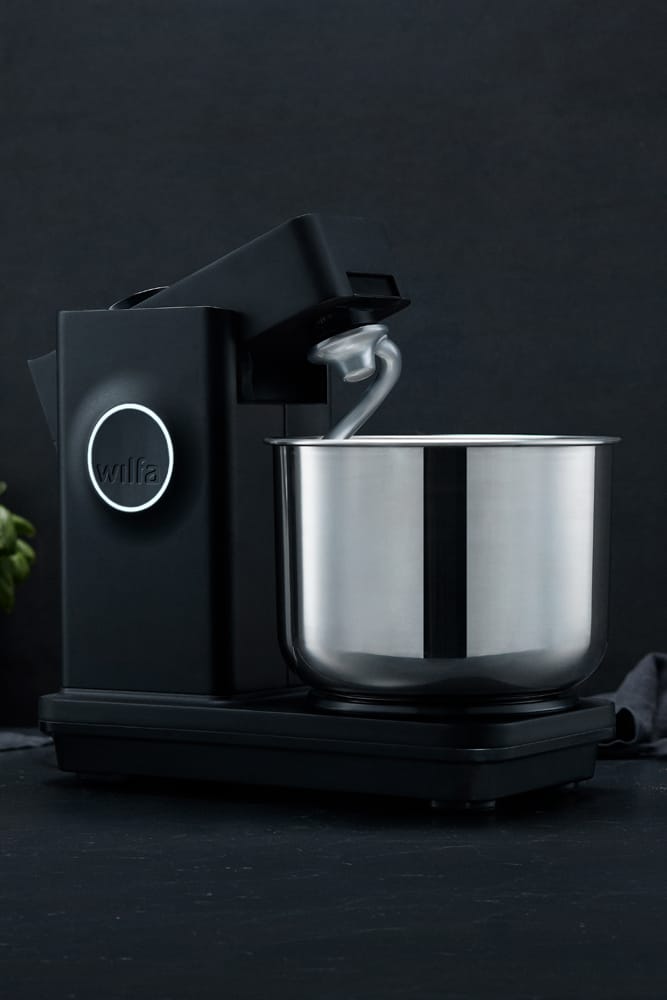
You're four minutes into kneading a big batch of dough and the machine simply stops. No noise, no smell, no warning. It's an alarming moment with a £899 mixer, and almost always an entirely undramatic explanation.
A ProBaker that stops during kneading has triggered its overload protection — a safety cut-out designed to protect the motor. Turn the speed control to 0, reduce the amount in the bowl, unplug the machine and let it cool for at least 30 minutes. It will start again. Nothing has broken.
The ProBaker has a 700W motor driving a rotating bowl and hook through three drive belts, and it's rated for up to 5kg of dough. Overload protection watches for the conditions that would damage that drivetrain and stops the machine before they do.
Three things set it off, sometimes together:
If the dough is very stiff, adding a little liquid helps more than anything else. Wilfa's own advice for a labouring machine is to raise the speed to around 50% and add liquid — a dry dough at low speed is the hardest combination the motor faces.
The speed light blinks and it won't start
The speed control isn't at 0. It's a safety feature — the machine won't start with a speed already dialled in, so that it can't lurch into motion the moment you switch it on. Turn the dial to 0 and start again.
It won't start at all
Work through four things: the switch is set to I, the cord is properly connected, the head is closed and locked down, and the overheat protection hasn't tripped. If it has, that's another 30 minutes of cooling.
The bowl feels loose
Usually one of three things. The rubber ring is missing. The bowl isn't locked — turn it clockwise until it stops, which is further than most people go. Or there's grease or flour between the bowl and the base, stopping it seating.
The bowl is difficult to attach
Same family of problem, opposite symptom. Clean the rubber ring and wipe the base. Dried dough and flour build up in the seating and stop the bowl dropping in properly.
The whisk isn't whipping properly
Check your speed. The dual whisk should never run above 70% — above that it knocks air out as fast as it puts it in, and cream or egg whites simply won't come up. More on that, and what every other speed is for, in our ProBaker speed guide.
It's very noisy
A bottom-mounted motor, a rotating bowl and hook, three drive belts and a metal chassis all make noise, and metal transmits it rather than damping it. It's normal. Raising the speed to around 50% while kneading, and adding liquid to a stiff dough, both reduce it.
The capacity is generous, but capacity is measured in finished dough weight, and a few things make a given weight harder work than another:
If you're regularly working at the top of the range, splitting into two batches is easier on the machine and rarely slower overall once you account for cooling time.
Overload protection resetting after 30 minutes is normal behaviour. A machine that trips repeatedly on small, easy loads, or one that won't start after a full cooling period with the speed at 0 and the head locked, is a different matter.
That's a warranty conversation. The ProBaker Stand Mixer carries a five-year product warranty and a ten-year warranty on the motor, and you don't need to have registered anything — your receipt is the warranty certificate. Contact the retailer you bought it from. Our warranty guide sets out the detail, including the exclusion for overloading, which is worth reading before a claim.
Why did my ProBaker stop while kneading dough?
It triggered its overload protection, a safety cut-out that protects the motor from too heavy a load, too high a speed or overheating. Turn the speed to 0, reduce the amount in the bowl, unplug the machine and let it cool for at least 30 minutes.
How long does a ProBaker take to cool down?
At least 30 minutes. Restarting before then will usually trip the protection again, because the motor hasn't lost enough heat.
Why is my stand mixer's speed light blinking?
The speed control isn't set to 0. The machine won't start with a speed already dialled in, so it can't start moving unexpectedly. Turn the dial to 0 and start again.
Why does the ProBaker bowl feel loose?
Either the rubber ring is missing, the bowl isn't fully locked, or there's grease or flour between the bowl and the base. Clean the ring and the base, then turn the bowl clockwise until it stops — further than most people expect.
How much dough can a Wilfa ProBaker handle?
Up to 5kg in its 7-litre bowl. Very stiff, low-hydration doughs are harder work than the weight suggests, so knead those at the lower end of the 20–40 speed band and consider splitting large batches in two.
A mixer that stops is a mixer with working safety electronics. Give it half an hour, take a little out of the bowl, and carry on.
Browse the ProBaker range · The ProBaker speed guide · Find your manual