Your Cart is Empty
FREE SHIPPING OVER £150 | USE CODE WELCOME FOR 10% OFF YOUR FIRST ORDER.


Boiling water is the right temperature for exactly one thing on this list, and it's the only temperature most kitchens can produce. Which is why a lot of green tea tastes bitter and a lot of pour over tastes harsh, and why people assume the leaves or the beans are at fault.
Filter and pour over coffee want 92–96°C. Cafetière wants around 95°C. Black tea and herbal infusions want boiling water. Green and white teas want 70–80°C, and oolong sits between at 85–95°C. Boiling water on green tea is the single most common cause of bitter tea.
| What you're making | Temperature | Why |
|---|---|---|
| Filter coffee, pour over | 92–96°C | The ECBC-certified brewing range — hot enough to extract fully, not so hot it turns bitter |
| Cafetière | Around 95°C | Full immersion, so slightly hotter compensates for the coarser grind |
| AeroPress | 80–92°C | Lower temperatures suit lighter roasts and shorter steeps |
| Black tea | 95–100°C | Robust leaves need full heat to open up |
| Herbal and rooibos | 100°C | Tougher plant material; boiling water is correct |
| Oolong | 85–95°C | Varies with oxidation — lighter oolongs lower, darker higher |
| Green tea | 70–80°C | Delicate leaves scorch and turn bitter above this |
| White tea | 70–80°C | The most delicate of all |
| Matcha | Around 80°C | Boiling water makes it harsh and grassy |
This is the range Wilfa's coffee makers hold from the first drop to the last, and the range they're ECBC certified against. It isn't arbitrary.
Below about 92°C, water doesn't dissolve enough of what's in the coffee. The result is thin and sour — under-extracted. Above about 96°C, extraction runs past the good compounds into the bitter ones, and you get harshness and a dry finish.
Boiling water is 100°C, which sits above the useful range. If you're making pour over with a standard kettle, the usual advice is to boil and then wait around thirty seconds — which works, roughly, but depends on your kettle, your room and how much water is in it. A kettle that lets you select the temperature removes the guesswork.
If you only change one habit, change this.
Green tea leaves are lightly processed and delicate. Boiling water scorches them, which releases tannins fast and produces the astringent, bitter cup that puts a lot of people off green tea entirely. At 70–80°C the same leaves give something sweet, grassy and rounded.
The difference is not subtle, and most people who think they dislike green tea have only ever had it made wrong.
Both come up often enough to be worth explaining, because both look like faults and neither is.
Why 90°C takes longer than boiling
It seems backwards — surely a lower target is quicker?
The kettle heats fast to around 70–80°C, then deliberately slows down. It has to, because water carries thermal momentum: heat it hard to 90 and it will sail past to 94 or 95 before the element stops. Approaching the target gradually is what keeps it accurate. Boiling needs no such care, because there's nothing to overshoot into.
So the extra time is precision, not inefficiency.
Why small amounts are less accurate
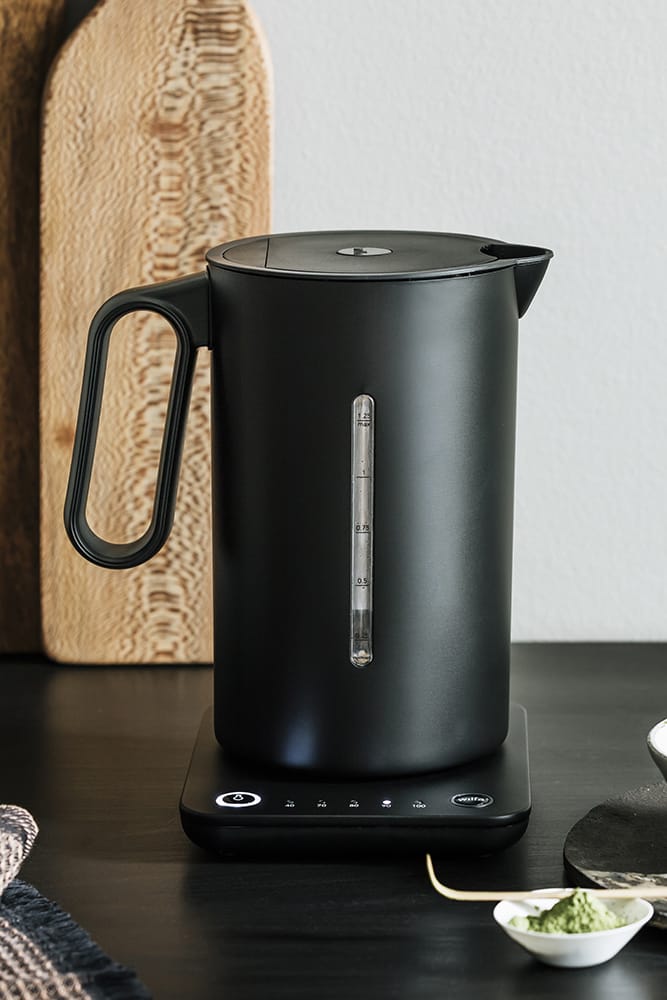
The Wilfa Fixed Temperature Control Kettle holds 1.25 litres and, with around a litre in it, normally sits within ±3°C of the temperature you've selected.
With much less water, accuracy drops. There's less thermal mass, so the water heats faster than the sensor can respond, and it's harder to hold a low target such as 40°C at all. If you need a low temperature accurately, use cold water from the tap and fill to at least a litre.
The kettle's water-contact plastics are BPA-free, and it carries the standard five-year Wilfa warranty.
What temperature should water be for pour over coffee?
Between 92 and 96°C. This is the range Wilfa's coffee makers are certified to hold throughout the brew. Below it, coffee under-extracts and tastes sour and thin; above it, extraction runs too far and turns bitter.
What temperature should green tea be?
Between 70 and 80°C. Boiling water scorches green tea leaves and releases tannins quickly, which is the most common cause of bitter, astringent green tea. White tea and matcha are similar; matcha is best at around 80°C.
Why does my kettle take longer to reach 90°C than to boil?
It heats quickly to around 70–80°C and then slows deliberately, so the water doesn't overshoot the target. Approaching a set temperature gradually is what makes it accurate. Boiling requires no such control, so it can run at full power throughout.
How accurate is a temperature-controlled kettle?
The Wilfa Fixed Temperature Control Kettle normally holds within ±3°C of the selected temperature with around a litre of water in it. With much smaller volumes, accuracy drops, because there's less thermal mass for the sensor to work with.
Can I leave water in the kettle overnight?
Not longer than 24 hours. Empty it and refill with fresh cold water. Only water should ever go into the kettle.
Coffee at 94 and green tea at 75 are both meaningfully better than the same things made with boiling water, and neither takes any more effort once the kettle does the thinking.
Shop the Fixed Temperature Control Kettle · Browse Wilfa kettles · Wilfa coffee makers