Your Cart is Empty
FREE SHIPPING OVER £150 | USE CODE WELCOME FOR 10% OFF YOUR FIRST ORDER.


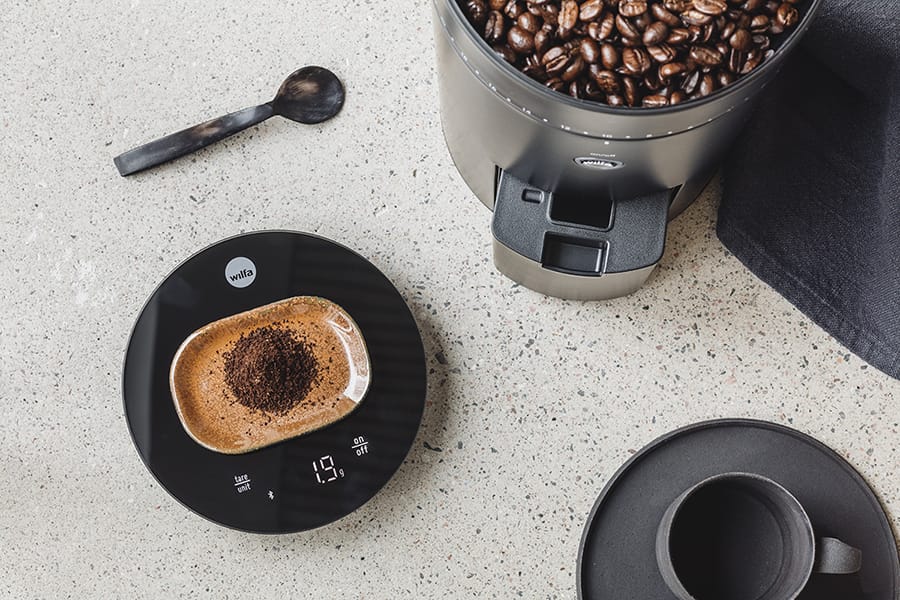
You grind for a pot of coffee, lift out the container, and a fine grey haze drifts onto the worktop. Half the grounds are clinging to the sides. It looks like something is going wrong. Nothing is.
Coffee clinging to the container and dust on the worktop is static electricity, not a fault. Coffee particles rub together as they're ground and pick up a charge. Four things reduce it: add a few drops of water to the beans before grinding, wait a minute before removing the container, tap it on the worktop, and use a metal container rather than plastic.
Grinding is friction. Beans are broken apart between two burrs, the fragments rub against each other and against the grinder at speed, and electrons move between them. The result is a container full of coffee particles carrying a charge, repelling each other and sticking to whatever surface is nearest.
It's the same effect as a balloon on a jumper, at a much smaller scale and in much greater quantity.
Three things make it worse:
One thing worth separating out. If your grinder has started producing noticeably more fine dust than it used to, or has stopped grinding as finely as it once did at the same setting, that's not static — that's a cleaning issue.
Coffee oils and compacted fines build up around the burrs and change how the grinder cuts. The fix is a proper clean rather than a change of habit, and our grinder cleaning guide walks through it model by model.
Why does my coffee grinder make so much static?
Coffee particles rub against each other and against the grinder as they're ground, which transfers a charge between them. Charged particles repel each other and cling to surfaces. It's normal for all burr grinders and gets worse in dry air, with darker roasts, and at finer grind settings.
How do I stop coffee grounds sticking to the container?
Add a few drops of water to the beans and stir them before grinding — this is the most effective fix and the one Wilfa recommends. Also wait a minute or two before removing the container, tap it on the worktop, and use a metal container rather than plastic.
Does adding water to coffee beans affect the taste?
No, not at the quantity involved. A few drops stirred through the beans is enough to dissipate the static charge and far too little to change extraction or flavour. Don't use more than a few drops, as genuinely damp coffee will clog the burrs.
Is static in a coffee grinder a fault?
No. Every burr grinder generates static to some degree, and it isn't covered by warranty because it isn't a defect. Wilfa's grinders reduce it with an anti-static system and metal ground containers, but no grinder eliminates it entirely.
Why is my grinder producing more coffee dust than it used to?
That's usually a cleaning issue rather than static. Coffee oils and compacted fine particles build up around the burrs and change how the grinder cuts. Clean the burr assembly and containers, dry everything thoroughly, then re-check your grind setting.
Static is the most complained-about thing about grinders and one of the easiest to deal with. Water on the beans and a pause before you lift the container will fix most of it.
Browse Wilfa coffee grinders · Accessories and spare parts · How to clean your grinder